
Currently Empty: $0.00
Introduction
Children learn many things while they play. Pretend play is one of the best ways for children to use their imagination and understand the world around them.
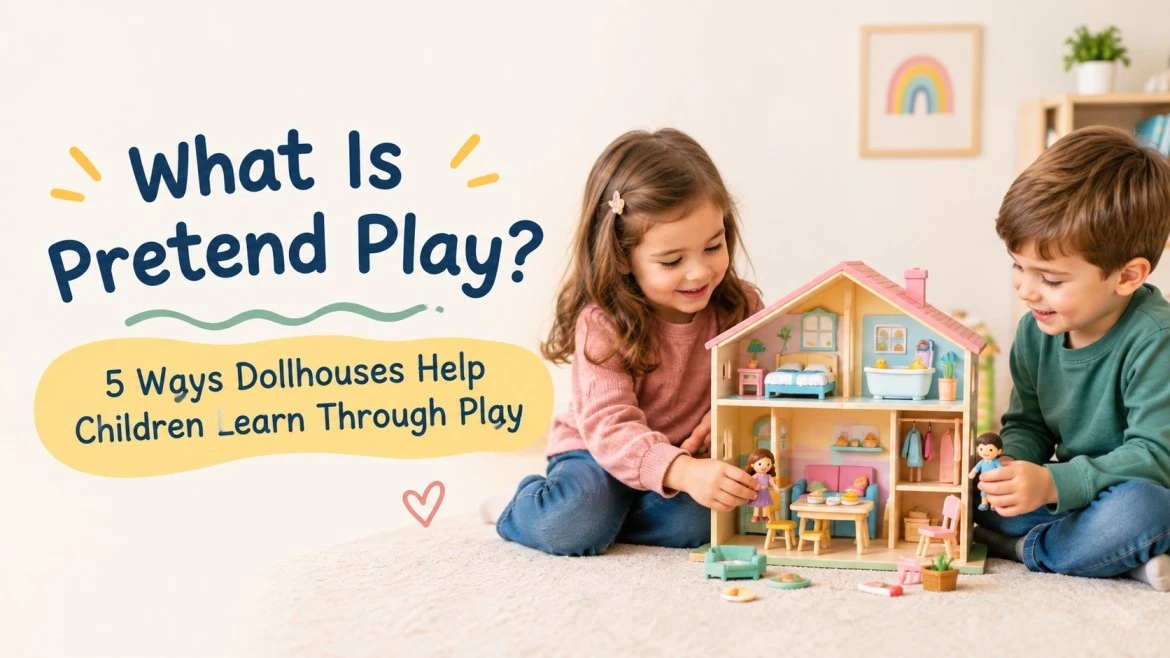
Pretend play means acting out different situations using toys, dolls, or everyday objects. A simple dollhouse can become a family home, a restaurant, a school, or even a magical fairy house.
While children are having fun, they are also learning important skills. Here are five simple ways dollhouse pretend play can help children learn and grow.
1. Builds Imagination and Creativity
A dollhouse gives children a small world where they can create their own stories.
They can decide who lives in the house, what the dolls are doing, and what happens next. Today, the dolls may be having breakfast. Tomorrow, they may be going on a big adventure.
There are no fixed rules. Children can use their imagination in many different ways. This helps them become more creative and confident in sharing their ideas.
2. Helps Develop Language and Storytelling
Pretend play gives children many chances to talk.
They may make their dolls speak, create conversations, or tell a story about what is happening in the house. For example, a child may pretend that one doll is cooking while another doll is getting ready for bed.
As they play, children learn to use new words, explain their ideas, and create simple stories. Playing with parents or friends also gives them more opportunities to communicate.
3. Teaches Everyday Life Skills
Children often copy what they see adults doing.
With a dollhouse, they can pretend to cook food, eat meals, take a bath, get dressed, go to bed, or care for another person.
These simple activities help children understand everyday routines. They can also learn about sharing, helping others, taking care of things, and making simple choices.
4. Supports Hands-On Learning
Dollhouse play is not just about imagination. Children also use their hands while they play.
Picking up small objects, moving furniture, changing doll clothes, arranging food, and placing accessories in different areas can encourage careful hand movements and coordination.
Because children are enjoying the activity, these small actions can become a natural part of learning.
5. Encourages Social and Emotional Skills
Pretend play can help children explore feelings and relationships.
When children play together, they learn to share toys, take turns, listen to others, and work together to create a story.
They can also use their dolls to act out situations such as helping a friend, welcoming someone into the house, or taking care of someone who is tired or upset.
This gives children a simple way to explore emotions and understand different situations.
Conclusion
Pretend play is more than just playing with toys. It gives children a chance to imagine, create, communicate, and explore the world around them.
A dollhouse can provide many opportunities for this type of play. From preparing a pretend meal to changing doll clothes or creating a new story, every play session can be different.
The Felt Fairy House from Tiny Mighty Toys is designed for this kind of imaginative play, with two dolls and different areas for sleeping, bathing, dressing, cooking, and dining.
Sometimes, a small dollhouse can open the door to a very big world of imagination and learning.