Currently Empty: $0.00
Introduction
Pretend play gives children a chance to use their imagination and create their own stories. A toy can become a character, a small house can become a castle, and a play kitchen can become a busy restaurant.
For Canadian kids ages 5–10, pretend-play toys can be a fun way to stay creative, especially during cold or rainy days when outdoor play is not always possible.
Here are five types of imaginative pretend-play toys that can keep kids busy while helping them learn through play.
Dollhouses and Miniature Playhouses
Dollhouses let children create their own little world. They can decide who lives there, what happens each day, and how the characters interact.
One day, the dollhouse might be a family home. The next day, it could become a magical house or a place for an exciting adventure.
Dollhouses can also encourage storytelling and communication. Children can create conversations between their characters and make up new stories as they play.
Dress-Up and Character Toys
Dress-up toys can quickly turn children into different characters. They might pretend to be a doctor, chef, firefighter, teacher, explorer, or superhero.
Children can create their own characters and decide what happens in their story.
For example, you could ask, “What would you do if you were an explorer who discovered a secret island?”
There is no right or wrong answer. Kids can use their imagination to create the adventure.
Felt Storytelling Toys
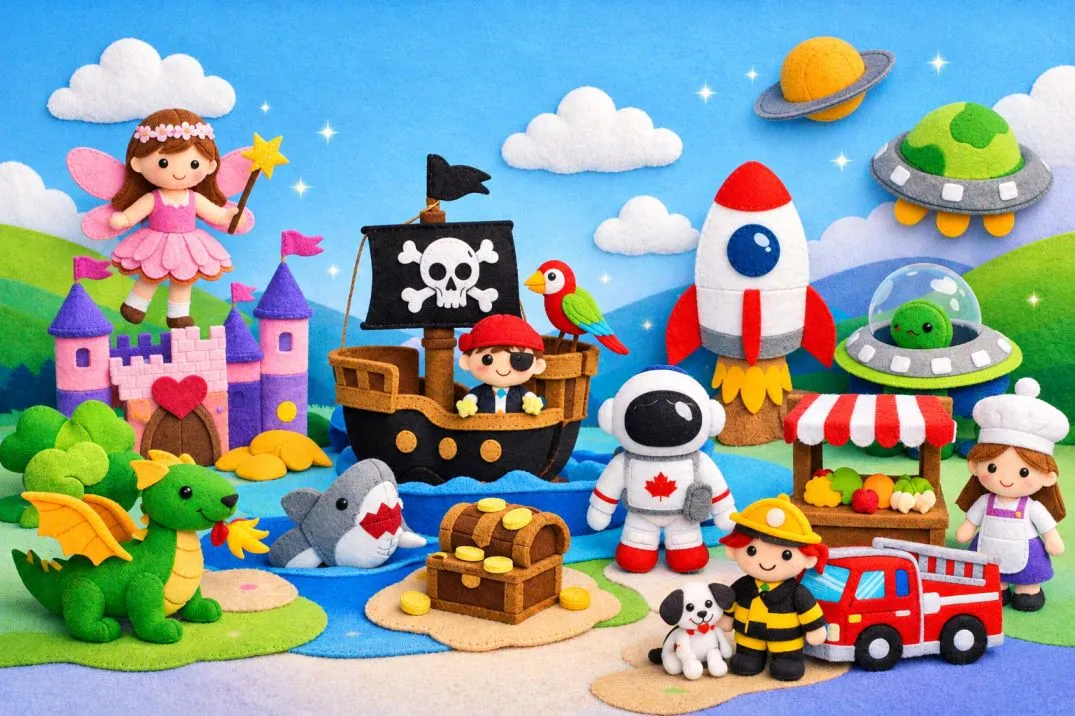
Felt toys are simple but can provide many opportunities for creative play. Children can use felt characters, animals, houses, and other pieces to build their own stories.
A child might create a story about a family visiting a lighthouse in Canada. They can move the characters around and change the story whenever they want.
This type of play can also help children practise speaking, storytelling, and using new words.
Pretend Kitchens and Shops
Children often enjoy copying things they see adults doing. A pretend kitchen can become a restaurant, while a small table can become a grocery store.
Kids can create menus, take pretend orders, prepare toy food, or play cashier.
They can also learn simple ideas about planning, counting, communication, and sharing while having fun.
You do not need a complicated play setup. A few toys and household items can be enough to create a fun pretend world.
Open-Ended Pretend-Play Toys
Open-ended toys are toys that can be used in many different ways. They do not have one fixed purpose.
A small felt house could become a home, castle, shop, or secret hideout. A toy character could be a teacher one day and an explorer the next.
This freedom allows children to decide how they want to play. They can also combine different toys to create bigger stories.
How to Choose a Pretend-Play Toy
When choosing a toy for a child ages 5–10, think about what they enjoy.
Ask yourself:
- Does my child enjoy making up stories?
- Do they like characters and animals?
- Can the toy be used in different ways?
- Is it easy to use indoors?
- Can siblings or friends play together?
For Canadian families, indoor-friendly toys can be especially useful during winter and rainy days.
Conclusion
Pretend play is more than just entertainment. It gives children a chance to create stories, communicate, solve simple problems, and explore new ideas.
Dollhouses, dress-up toys, felt storytelling sets, pretend shops, and open-ended toys can all help children ages 5–10 enjoy creative play.
The best toy does not always need lots of lights, sounds, or complicated rules. Sometimes, a simple toy gives children more freedom to imagine.
Whether they are running a pretend café, exploring a lighthouse, or creating a magical home, pretend play lets Canadian kids make the story their own.